Lecture Overview
The lecture completed glycolysis from the aldolase reaction through lactate and compared that ending with alcoholic fermentation. It then returned to nicotinamide adenine dinucleotide (NAD), allosteric regulation, and the two stated roles of glycolysis before introducing equilibrium, free energy, Beer's Law, and a lactate dehydrogenase activity calculation. Everything through the lactate dehydrogenase/international-unit calculation was marked as first-midterm material. The final portion began second-midterm material by comparing starch and glycogen and explaining how glycogenin primes glycogen synthase.
Aldolase and triose phosphate isomerase create two glyceraldehyde 3-phosphate streams
Reversible aldolase cleavage and rapid triose phosphate isomerase activity turn one six-carbon glucose into two glyceraldehyde 3-phosphate molecules that continue through glycolysis.
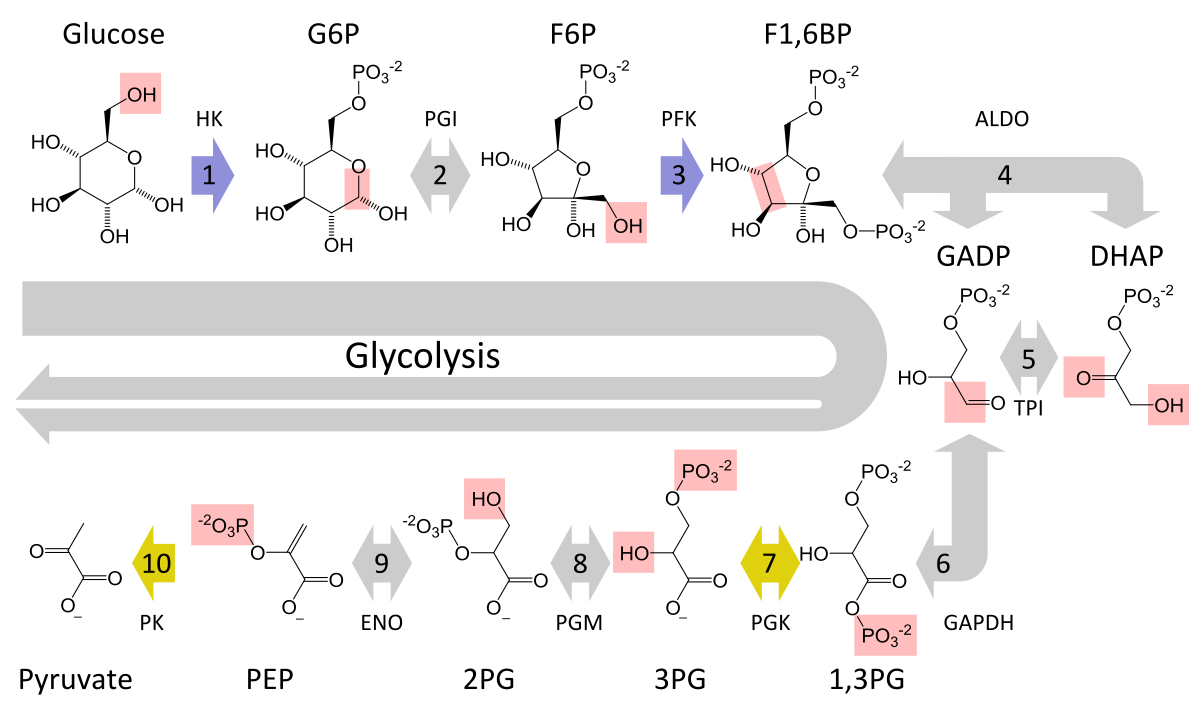

- Aldolase cleaves fructose 1,6-bisphosphate between carbons 3 and 4 to make one dihydroxyacetone phosphate (DAP) and one glyceraldehyde 3-phosphate (G3P).
- In the reverse direction, aldolase positions DAP beside G3P and carries out an aldol condensation to form fructose 1,6-bisphosphate.
- Triose phosphate isomerase (TPI) rapidly converts DAP to G3P, so two G3P molecules proceed from each glucose.
- Inorganic phosphate is not a product of aldolase cleavage; it is a substrate in the next reaction.
- TPI was described as catalytically perfect: diffusion of substrate to the active site and departure of product limit its rate, and every substrate that reaches the active site is converted.
- Without TPI, half of glucose's carbon would not continue down the pathway.
Glyceraldehyde 3-phosphate dehydrogenase conserves oxidation energy in 1,3-bisphosphoglycerate
Glyceraldehyde 3-phosphate dehydrogenase couples G3P oxidation to NAD reduction and formation of a high-energy acyl phosphate rather than losing most of the oxidation energy as heat and entropy.
Glyceraldehyde 3-phosphate dehydrogenase substrates and products
G3P + inorganic phosphate + NAD --[glyceraldehyde 3-phosphate dehydrogenase]--> 1,3-bisphosphoglycerate (1,3-BPG) + NADH + H+
- Glyceraldehyde 3-phosphate dehydrogenase (G3PDH) has three substrates: G3P, inorganic phosphate, and nicotinamide adenine dinucleotide (NAD).
- Its three products are 1,3-bisphosphoglycerate (1,3-BPG), NADH, and a proton.
- As a rule of thumb, dehydrogenases transfer electrons to NAD, whereas kinases transfer phosphate groups.
- Two G3P molecules enter this reaction for every glucose because TPI supplies the second G3P.
- 1,3-BPG is distinct from hemoglobin-associated 2,3-BPG.
NAD hydride transfer
- A hydride from G3P supplies the hydrogen and two electrons that reduce NAD to NADH.
- The released proton comes from inorganic phosphate.
- Using water instead of inorganic phosphate would oxidize the aldehyde to the level of a carboxylic acid while losing much of the energy as heat and entropy.
- Inorganic phosphate instead conserves energy in the acyl phosphate of 1,3-BPG. The molecule is a pathway intermediate and a product of this enzyme, not an intermediate held at the active site.
- A high-energy compound was defined here by the large negative free-energy change when it breaks down. The approximate biochemical standard free-energy change for 1,3-BPG breakdown is ΔG′ ≈ −12 kcal/mol.
- The prime denotes a reference condition of 1 M substrates and products except protons, which are at pH 7.

Phosphoglycerate kinase captures ATP
1,3-BPG + adenosine diphosphate (ADP) --[phosphoglycerate kinase]--> 3-PGA + ATP
- ATP synthesis has ΔG′ = +7.7 kcal/mol, so 1,3-BPG breakdown releases more than enough energy to support it. The lecturer said needed numerical values would be supplied on an exam.
- Phosphoglycerate kinase is reversible even though some other glycolytic kinases catalyze one-way reactions. Cellular concentrations, rather than the word kinase, determine its direction.
- The product is 3-phosphoglycerate (3-PGA), named because its phosphate is on carbon 3.
- Acronyms spoken in lecture or shown on a slide are acceptable terminology.
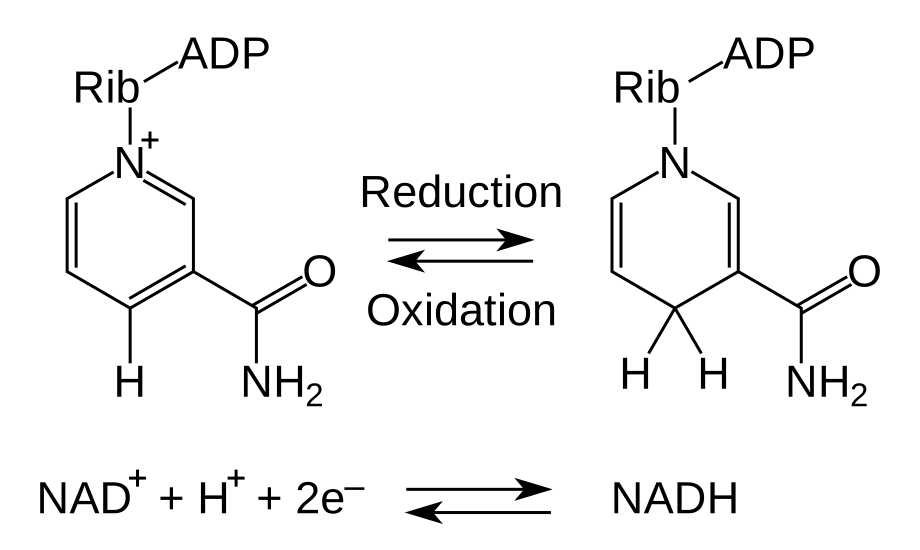
The glycolytic payoff ends by regenerating NAD
After glycolysis breaks even at 3-PGA, phosphate rearrangement and phosphoenolpyruvate breakdown make the second pair of ATP molecules, while lactate dehydrogenase restores the small NAD pool.
ATP break-even point
- From one glucose, two ATP were consumed earlier and two ATP have been made by the time the two 3-PGA molecules form.
- Glycolysis has therefore broken even at this point; ATP made after it provides the net yield.
Phosphoglycerate mutase exchanges phosphates
3-PGA --[phosphoglycerate mutase]--> 2-PGA
- A mutase moves a group from one position on a molecule to another, and 3-PGA and 2-PGA are structural isomers.
- The phosphate placed on carbon 2 is not the same phosphate that began on carbon 3. The active site already carries a phosphate and performs what the lecturer called a “shell game,” avoiding simple removal and reattachment of the original phosphate.
Enolase makes unstable phosphoenolpyruvate
2-PGA --[enolase; removal of H2O]--> phosphoenolpyruvate
- Enolase removes the carbon-3 OH and carbon-2 H as water to make phosphoenolpyruvate (PEP).
- The resulting double bond and phosphate make PEP unstable. The phosphate pins the molecule until its release allows favorable enol-to-keto tautomerization.
- PEP breakdown has ΔG′ ≈ −13.8 kcal/mol, more than enough in magnitude to support ATP formation.
Pyruvate kinase and lactate dehydrogenase finish the pathway
PEP + ADP --[pyruvate kinase]--> pyruvate + ATP
Pyruvate + NADH + H+ --[lactate dehydrogenase]--> lactate + NAD
- Pyruvate kinase transfers phosphate from PEP to ADP, permits tautomerization, makes ATP and pyruvate, and catalyzes a one-way reaction.
- The lecturer corrected the textbook's arrow emphasis: he said the pyruvate-kinase arrow and the other one-way arrows should be bold, while not identifying any broader correction.
- Lactate dehydrogenase (LDH) reduces pyruvate's carbonyl group to an alcohol using NADH and a proton.
- The net yield is two ATP per glucose.
- LDH regenerates NAD so that G3PDH can continue despite the small cellular NAD pool.
Alcoholic fermentation uses a different NAD-regeneration branch
Alcoholic fermentation includes the glycolytic path from glucose to pyruvate and then two different final reactions that make ethanol and regenerate NAD.
Pyruvate --[pyruvate decarboxylase; Mg, TPP]--> acetaldehyde + CO2Acetaldehyde --[alcohol dehydrogenase]--> ethanol
- Drawing only these final two reactions would omit most of alcoholic fermentation; the lecturer emphasized knowing all glycolysis steps for the first midterm.
- Pyruvate decarboxylase catalyzes a one-way reaction and requires magnesium plus the coenzyme thiamine pyrophosphate (TPP). TPP's chemistry was deferred.
- Alcohol dehydrogenase regenerates NAD, allowing the pathway to continue with a small NAD pool.
- None of these pathway reactions proceeds without its required enzyme.
- Most pathway enzymes were described as Michaelis–Menten enzymes with hyperbolic velocity-versus-substrate plots, while some key enzymes were described as allosteric enzymes with sigmoidal plots.
NAD provides an orienting handle and a hydride-transfer site
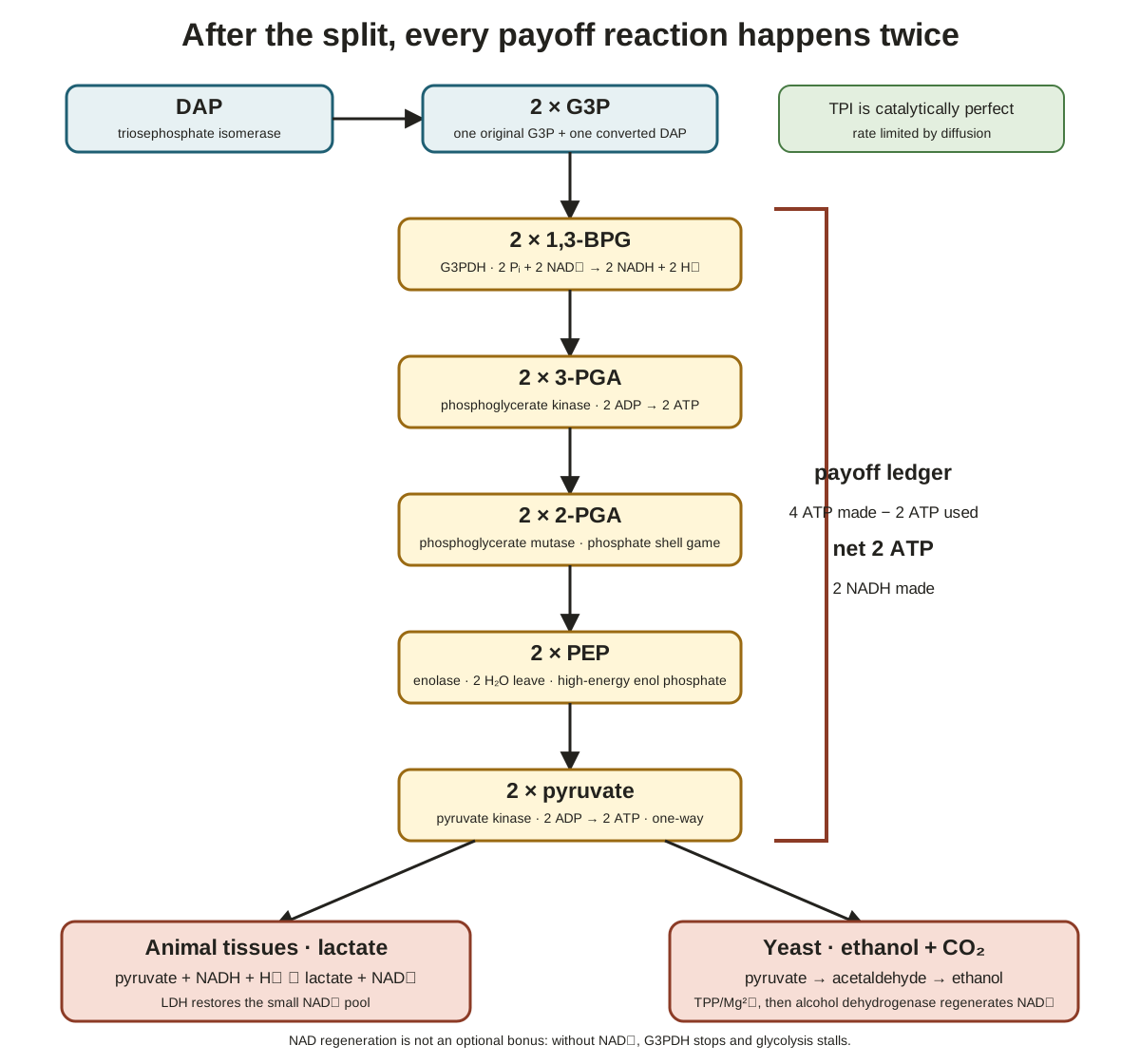
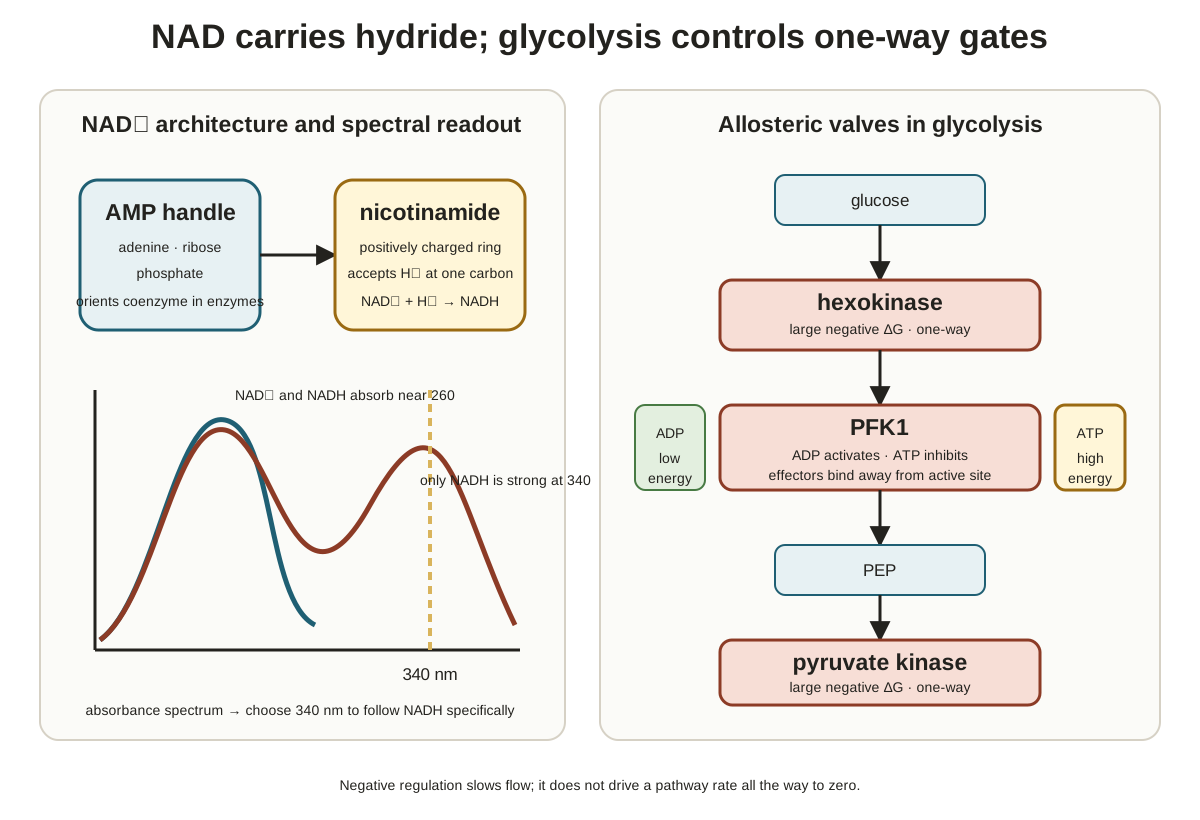
NAD's adenosine monophosphate portion helps an enzyme position the molecule, while the nicotinamide ring is the business end that accepts a specifically placed hydride.
AMP handle and nicotinamide business end
- Students were asked to know both the oxidized NAD+ and reduced NADH structures because many later processes depend on them.
- The adenosine monophosphate (AMP) portion acts as a positioning handle at enzyme active sites; similar AMP portions occur in other small organic molecules.
- The nicotinamide portion contains an amide and is the business end.
- An enzyme positions a hydride at a particular carbon of the nicotinamide ring. Resonance distributes some of the positive charge from nitrogen to that carbon, helping explain why the hydride adds there.
- Hydride addition removes the positive charge and produces NADH. NAD+ is the oxidized form, and NADH is the reduced form.
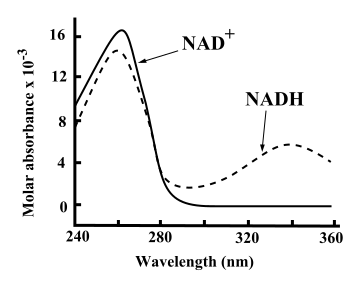
NAD+ and NADH absorbance at 340 nm
| Property | NAD+ | NADH |
|---|---|---|
| Redox state | Oxidized | Reduced |
| Absorbance near 260 nm | Absorbs | Absorbs, with only a small difference from NAD+ |
| Absorbance at 340 nm | Does not absorb | Absorbs strongly |
- Measurements in this ultraviolet range require quartz rather than plastic cuvettes.
- Protein and nucleic-acid absorbance makes the region near 260 nm poor for distinguishing the two forms.
- At 340 nm, the strong NADH signal and lack of NAD+ absorbance allow biochemists to follow NADH.

Allosteric enzymes control glycolytic flow
The one-way glycolytic reactions were presented as allosteric control points whose rates respond sensitively to cellular compounds rather than switching the pathway completely off.
- Reactions with large negative ΔG values were associated with multisubunit enzymes that have sigmoidal velocity-versus-substrate behavior.
- The one-way, allosteric glycolytic enzymes identified here included hexokinase and pyruvate kinase; pyruvate decarboxylase is an additional allosteric one-way enzyme in alcoholic fermentation.
- The other glycolytic enzymes remain important but were described as Michaelis–Menten enzymes rather than sigmoidal ones.
- Adenosine diphosphate (ADP) activates the glycolytic control point used as the regulation example. ADP buildup signals that the small adenylate pool needs to be shifted toward ATP production.
- ATP inhibits that control point. ATP buildup slows glycolytic flow but does not stop metabolism or drive its rate to zero.
- Many other effectors exist but were not covered here.
Glycolysis supplies ATP and biosynthetic intermediates
Glycolysis and alcoholic fermentation have two stated roles: producing a net two ATP per glucose and supplying intermediates that cells can divert into other molecules.
- Glucose does not always proceed completely to lactate or ethanol.
- 3-PGA can leave glycolysis to make serine, which can then be converted to glycine or cysteine.
- DAP can be used to make glycerol for phospholipids and triacylglycerols.
- In red blood cells, 1,3-BPG can be diverted to 2,3-BPG. The lecturer described this as sacrificing glycolytic flow to meet that need.
Equilibrium provides a simplifying reference for cellular energetics
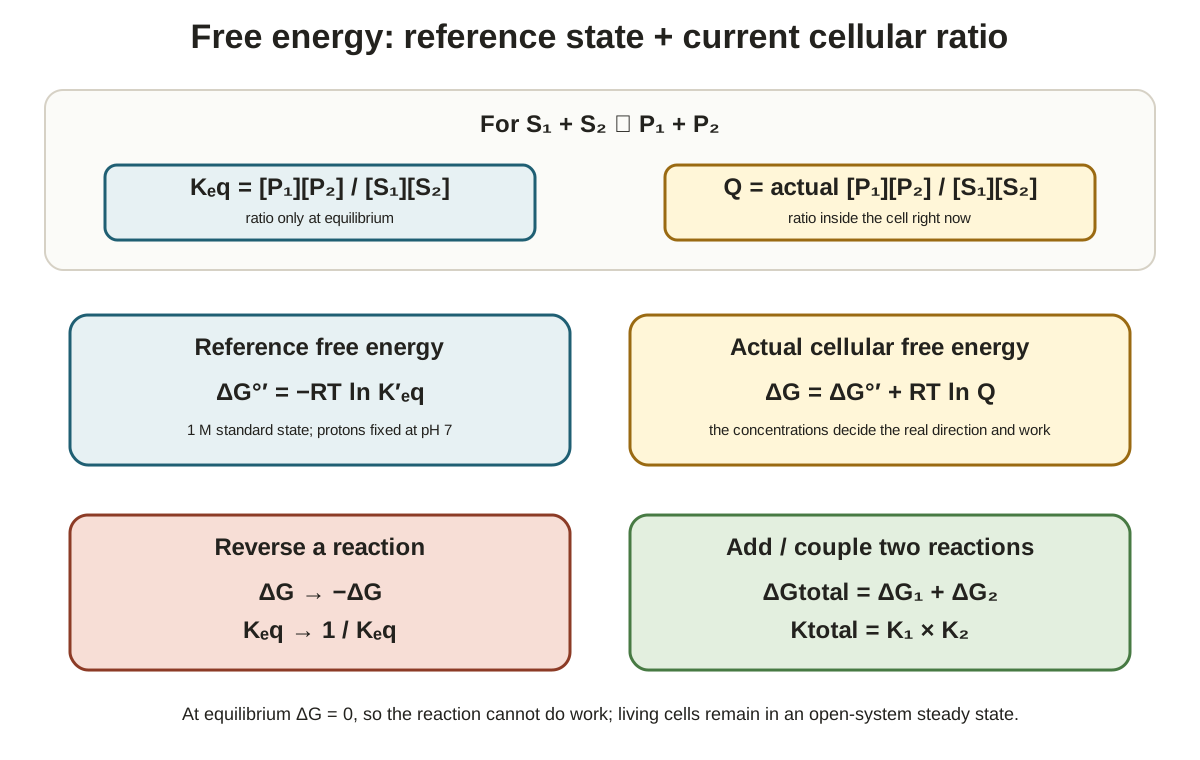
Cells are open steady-state systems that do not reach equilibrium, but equilibrium constants and standard free energies provide useful mathematical reference points.
Equilibrium constant and biochemical proton conditions
For A + B ⇌ P + Q:
K_eq = ([P][Q]) / ([A][B])
- Products appear over substrates in the equilibrium-constant expression.
- A reaction in a closed cuvette, tube, or beaker could eventually reach equilibrium, but that condition is not representative of a cell.
- The prime in
K′accounts for biochemical proton conditions. If a reaction consumes or produces protons, pH affects its equilibrium constant; two glycolytic reactions were said to include protons.
Standard and actual free energy
ΔG = RT ln((actual product/substrate ratio) / K_eq)
Ris the gas constant,Tis temperature, and the expression uses the natural logarithm. A base-10 conversion would introduce a factor of 2.303.- If the actual product-to-substrate ratio equals its equilibrium value, ΔG = 0 and the reaction cannot do thermodynamic work.
- When all substrates and products are at the 1 M reference, their logarithmic concentration term is zero, giving
ΔG° = −RT ln K_eq. - With the standard species at 1 M but protons at pH 7, the biochemical reference is ΔG′.
- The actual cellular value is
ΔG = ΔG′ + RT ln(actual product/substrate ratio). - Cells depend on actual ΔG. Tabulated ΔG′ values allow comparison, while changing cellular concentrations change the actual free energy available.
- Equations would be supplied on exams; students were expected to understand what they mean.
Reversal and coupling rules
- Reversing a reaction reverses the sign of ΔG and inverts
K_eq. - Adding coupled reactions adds their ΔG values and multiplies their equilibrium constants.
- The assigned example problems were identified as the intended practice.
Beer's Law converts selective absorbance into concentration
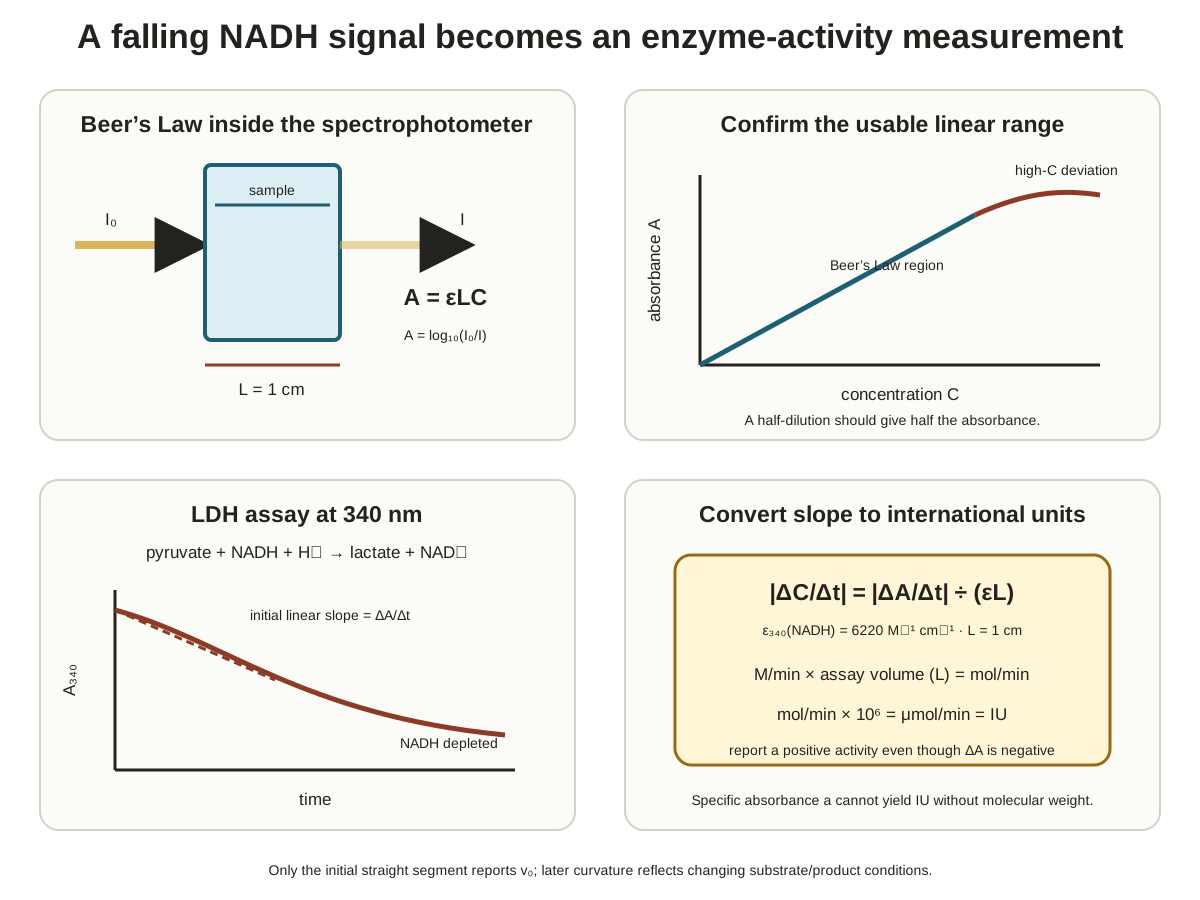
When one reaction component absorbs light selectively and the response is demonstrably linear, Beer's Law uses absorbance to determine its concentration.
Molar Beer's Law
A = εLC
Ais absorbance, calculated by the spectrophotometer as the base-10 logarithm of the incident-to-transmitted intensity ratio. It has no units.- The absorbing molecule needs conjugated double bonds.
Lis the light-path length, usually 1 cm.Cis molar concentration, commonly small for strongly absorbing compounds.εis the molar extinction coefficient. It is expected to be large and carries inverse-molar and inverse-centimeter units so the units ofLandCcancel.
Cuvette geometry and the linear range
- A typical cuvette holds about 1 mL but only needs enough liquid to cover the light path. Absorbance measures concentration, not total mass or filled volume.
- When a solute absorbs, the incident intensity
I0is greater than the transmitted intensityI. - Within the valid range, absorbance is directly proportional to concentration, producing a straight line through zero.
- Beer's Law may be used only after that linear relationship is demonstrated. At high concentration, instrument limits and molecule–molecule interactions produce curvature.
- Dilution provides a check: a one-half dilution should give one-half the absorbance, and a one-fifth dilution should give one-fifth the absorbance.
- The lecturer qualified that pH, wavelength, salt, and hydrophobic environment can change
ε, although that complexity would not be pursued in BIS 103. - In the linear region, known
εandLplus measuredAallow calculation ofC.
Specific absorbance when molecular weight is unknown
A = aLC
- The alternative form uses specific absorbance
aand a mass concentration such as mg/mL or g/100 mL. - It applies when the molecular weight of the absorbing species is not known. A standard curve is still possible, but
εcannot be used without a molar amount.
An LDH assay turns a falling NADH signal into enzyme activity
The initial linear decrease in A340 reports NADH consumption and can be converted through Beer's Law into positive international units of active LDH in the cuvette.
Reading the assay trace
Pyruvate + NADH + H+ --[LDH]--> lactate + NAD+
- At 340 nm, NADH is the absorbing substrate; pyruvate, protons, LDH, NAD+, and the chosen buffer were not expected to absorb there in this setup.
- A340 starts high because NADH is present and decreases when LDH consumes it. A flat trace indicates no measurable LDH.
- Use the initial linear slope before the reaction begins to level off.
- The slope is negative because NADH is consumed, but enzyme activity is reported as a positive value.
- An international unit (IU) is the number of micromoles of product made or substrate consumed per minute.
- HW1 and the first midterm stop at activity in the cuvette; later assignments extend the calculation toward activity in the original extract.
LDH international-unit calculation
- Take
ΔA340over a measured interval within the initial linear region. - Convert that interval to one minute. For a 15-second interval, multiply the absorbance change by 4.
- Use
ε = 6,220 M−1 cm−1andL = 1 cminA = εLCto calculateΔ[NADH]/minin mol/L/min. - Multiply by assay volume in liters to obtain mol/min. For example, 1 mL is 0.001 L and 3 mL is 0.003 L.
- Convert moles to micromoles using
1 μmol = 1 × 10⁻⁶ mol. - Equate micromoles of NADH consumed per minute with IU of active LDH. For example, 0.15 μmol NADH/min is 0.15 IU.
- Carrying units determines whether each step requires multiplication or division.
- The mass-based specific-absorbance form cannot yield IU because it does not give micromoles per minute.
- The homework answer key was planned for Wednesday.
The lecture draws the first-to-second-midterm boundary
Everything through the LDH/IU calculation is first-midterm material; starch, glycogen, and all material after this boundary belong to the second midterm.
Exam emphasis: The first midterm includes the material through calculating LDH activity in the cuvette. The first midterm was scheduled for the following Wednesday, with an extra room planned in the Teaching and Learning Complex. The lecturer then continued into second-midterm content to create scheduling buffer.
Starch combines linear and branched glucose polymers
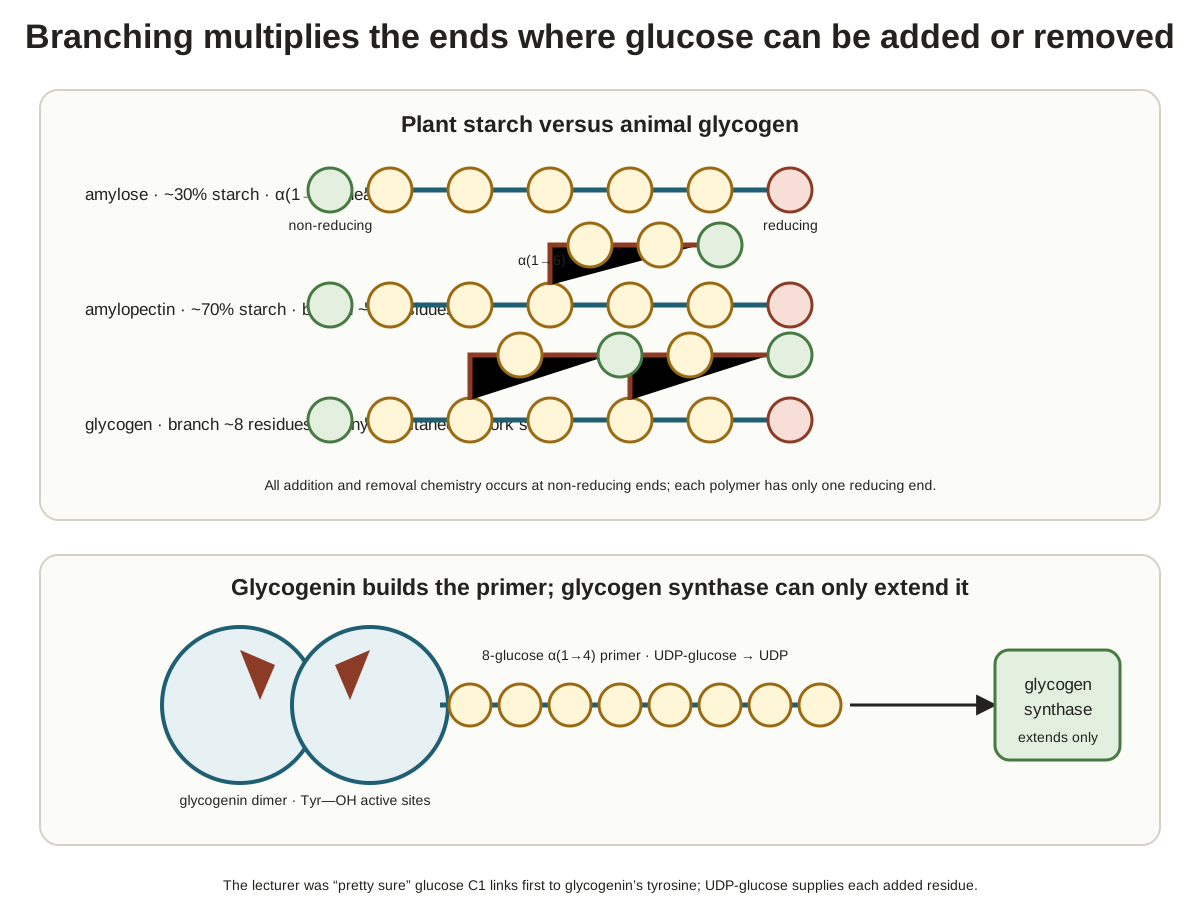
Plant starch contains about 30% linear amylose and about 70% branched amylopectin by weight, with branching multiplying the non-reducing ends where glucose can be added or removed.
- This new section contrasted starch in plants with glycogen in animals. Composition was compared first, and glycogen synthesis and breakdown would receive more detail because animal research receives more funding.
Amylose and its two ends
- Amylose is a linear glucose polymer joined by α-1,4 glycosidic bonds: carbon 1 of one glucose links to carbon 4 of the next, and the α bond lies below the ring plane.
- Forming each covalent linkage requires energy.
- One end can open as a hemiacetal and is the reducing end. The linked acetal end and all internal residues are non-reducing.
- Because open sugars can be oxidized and then are no longer usable as glucose, polymerization protects most residues. In the lecturer's example of a 400-residue chain, 399 residues are protected from oxidation and remain available as glucose.
Amylopectin adds α-1,6 branches
- Amylopectin makes up about 70% of starch and branches approximately every 24 residues; the spacing is not precise, and how the enzymes recognize when to branch was described as unknown.
- A branch is an α-1,6 linkage between carbon 1 of one glucose and carbon 6 of the chain, with the α bond below the donating glucose's ring plane.
- Each branch creates another non-reducing end.
- In both starch and glycogen, glucose addition and removal occur at non-reducing ends. Many amylopectin branches therefore allow many enzymes to add or remove residues at once, whereas a linear amylose molecule has one non-reducing end.
Glycogen branches frequently and begins on glycogenin
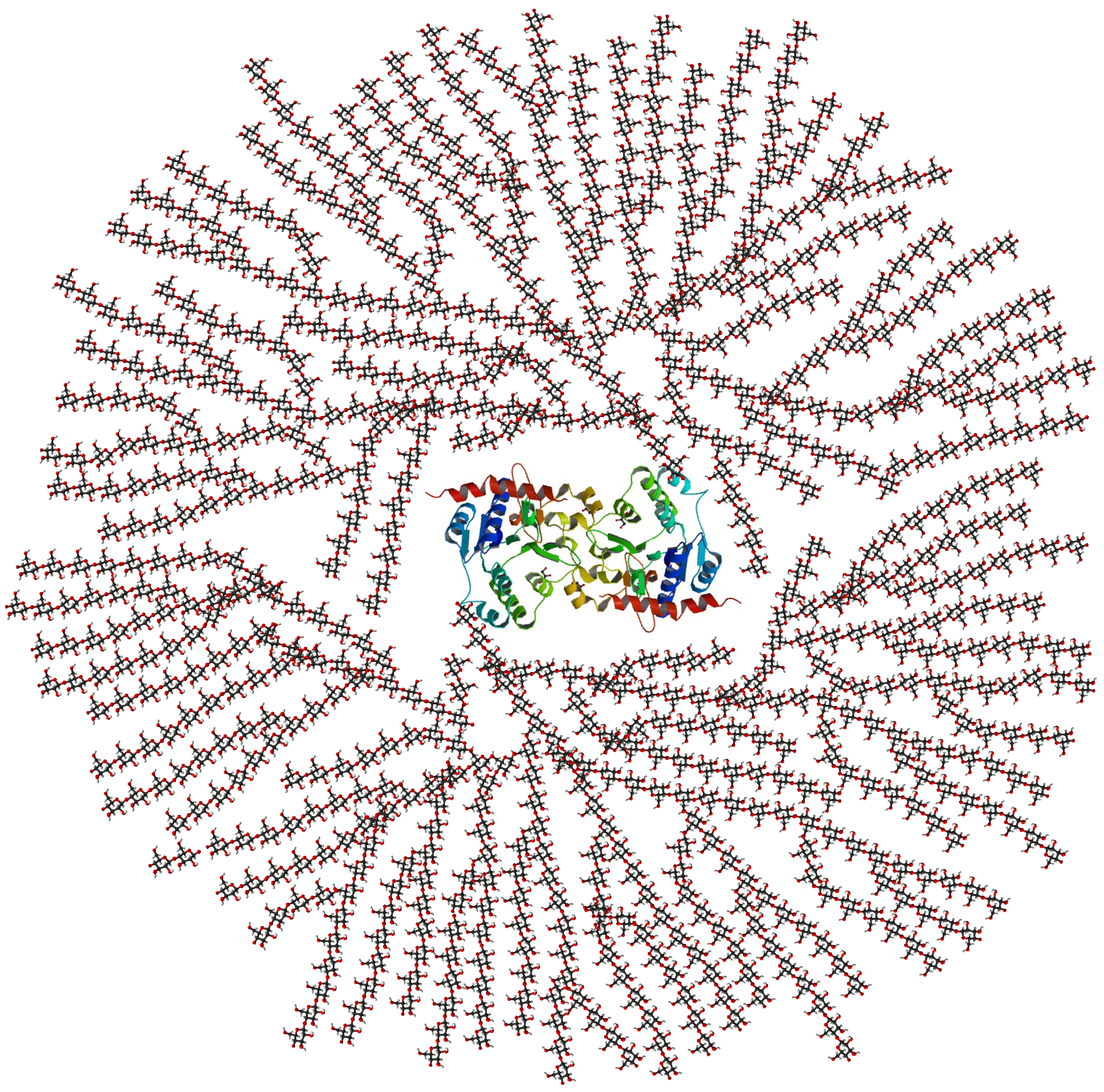
Animal glycogen branches about every eight residues and begins as an eight-glucose primer built on glycogenin, but the lecturer preserved several uncertainties about how glycogenin works and whether it remains attached.

Glycogen architecture
- Glycogen is the animal glucose-storage polymer and is stored mainly in the liver.
- Humans were said to store about one day's supply.
- Branches occur about every eight residues, creating more non-reducing ends than starch and allowing faster glucose addition or removal.
- A fully formed glycogen molecule was described as containing about 50,000 glucose residues.
Glycogenin begins the primer
- Glycogenin is a dimer of identical subunits, has quaternary structure, and has one active site per subunit.
- Each active site contains a tyrosine whose side-chain OH accepts glucose. Glycogenin acts as both enzyme and anchor for the growing polymer.
- It was not known whether the two active sites cooperate or act independently.
- It was also not known whether glycogenin remains attached to the mature glycogen molecule, leaves to begin another molecule, or persists for some other duration.
Uridine diphosphate glucose supplies activated glucose
- Uridine diphosphate glucose (UDP-glucose) enters glycogenin's active site. The uridine portion directs the activated glucose to enzymes that recognize it.
- Glycogenin links glucose covalently to the tyrosine OH and releases UDP; UDP release supplies energy through coupling.
- Glycogenin repeats UDP-glucose addition until it has added eight glucose residues total, producing an 8-mer primer with α-1,4 linkages between glucose residues.
- When asked about the initial tyrosine linkage, the lecturer was only “pretty sure” that it uses glucose carbon 1.
- It was unknown whether one active site performs all eight additions, whether the growing chain alternates between active sites, or whether each active site builds its own primer.
- Glycogenin cannot extend beyond eight glucose residues in the account presented here.
Glycogen synthase extends the required primer
Glycogen synthase cannot begin a chain on its own, but it can use glycogenin's 8-mer primer to add hundreds of α-1,4-linked glucose residues.
- Each extension step uses UDP-glucose and releases UDP.
- Repeated additions extend the polymer one glucose at a time.
- Glycogen synthase is therefore entirely dependent on the primer made by glycogenin.
- The lecturer distinguished the names: a synthetase uses a nucleoside triphosphate, whereas a synthase makes a product without using one.
- The lecture ended by confirming again that all glycogen material belongs to the second midterm.
- Students were reminded to begin the homework.
Study Review Questions
- How do aldolase and TPI ensure that all six carbons from one glucose continue through glycolysis as two G3P molecules?
- How does the G3PDH reaction conserve oxidation energy, and what are its three substrates and three products?
- How do phosphoglycerate mutase, enolase, and pyruvate kinase prepare for and capture the final glycolytic ATP payoff?
- Why is NAD regeneration necessary in both lactate formation and alcoholic fermentation?
- How do the structures and absorbance properties of NAD+ and NADH support an assay at 340 nm?
- What is the difference between ΔG′ and actual cellular ΔG, and how do reaction reversal and coupling change the energetic bookkeeping?
- What conditions must be established before Beer's Law can be used, and how is an initial A340 slope converted into LDH international units?
- How do branch frequency, reducing and non-reducing ends, glycogenin, and glycogen synthase distinguish the glucose-storage architectures discussed after the midterm boundary?